Water Circulates.
Island Grows.
Starting in the Caribbean, the Water 2040 Island Grows Initiative opens a new path to island growth through water circulation.
We envision a world
where water no longer limits what any island can become —
where every island can grow, and keep growing.
It starts with a simple choice:
not to throw water away,
but to regenerate it where it is used, and keep it moving.
Water Circulates.
Island Grows.
Turn on the tap in the morning, and the water is there.
No more days off work, waiting for water.
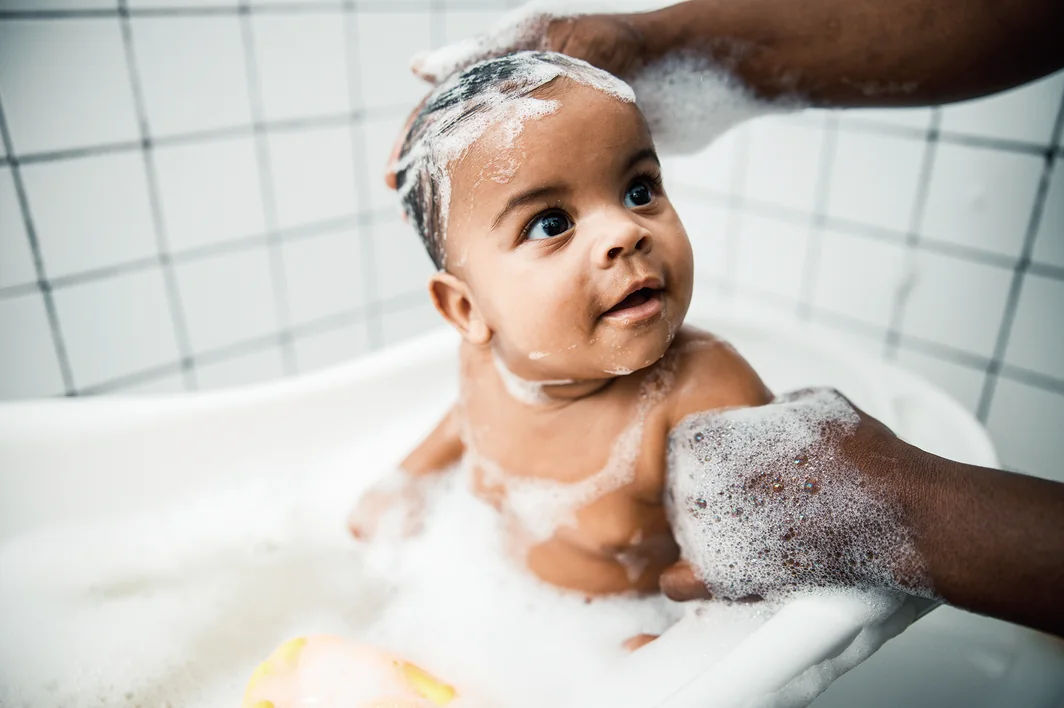
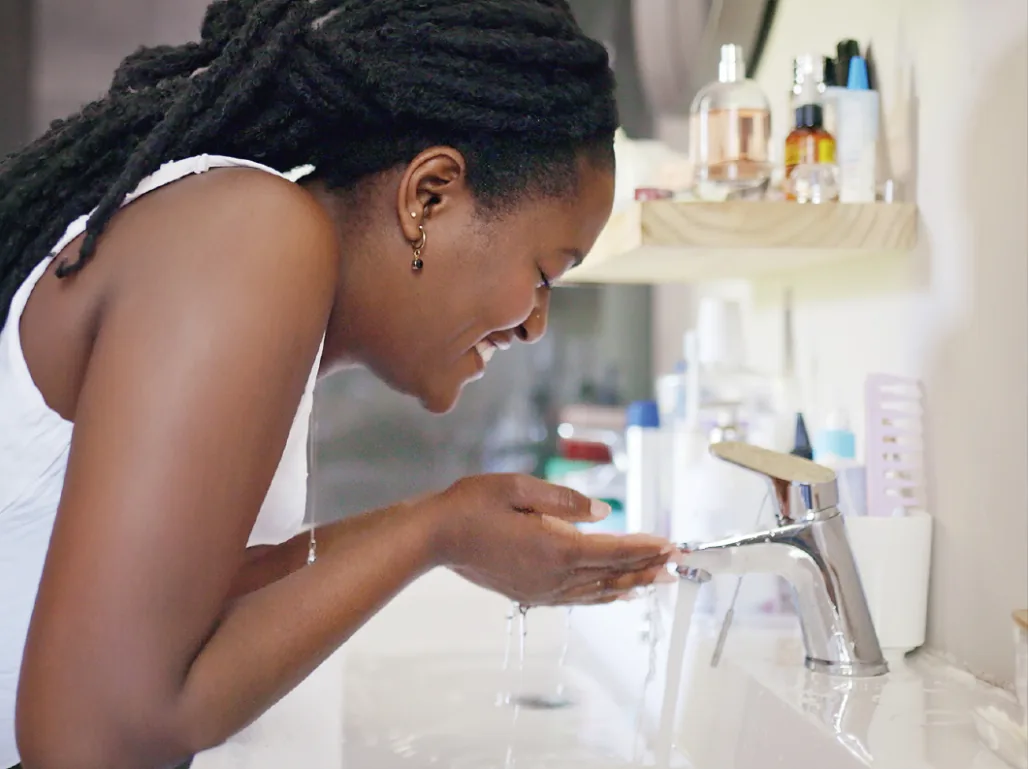
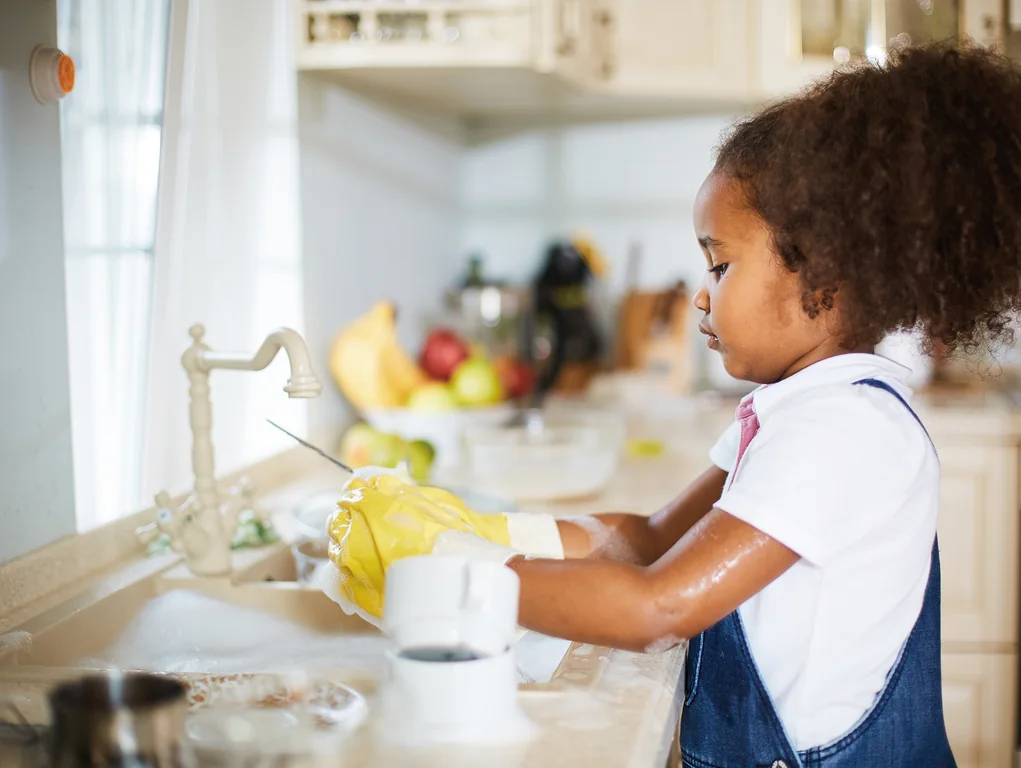
Safe water, every day, for children and for daily life.
When existing infrastructure and new technology work together,
water systems grow stronger —
and so do the businesses that run on water.
When less wastewater reaches the sea, the reefs are protected —
and so are tourism and the national economy.
Historically, many countries have polluted their water in the pursuit of growth,
then spent decades and enormous resources trying to restore it.
Islands don’t have to follow the same path.
From the very beginning, they can build a future
where used water becomes a resource, again and again.
From the Caribbean to
islands around the world.
Small-scale, decentralized water regeneration systems
carry forward the wisdom of people who have always treasured every drop —
toward a future where no one is left without water,
even as populations grow and the climate changes.
A future that passes this wisdom, and this technology,
to the children who will lead the islands next.
A choice for governments.
A choice for businesses.
A choice for communities.
When each of them makes that choice,
the circulation of water becomes the cycle of an island’s growth.
The Water 2040 Island Grows Initiative is already underway,
starting in the Caribbean.
Global issue
Addressing the structural challenges behind the global water crisis
Today, approximately 3.3 billion people—more than 40% of the world’s population—live in areas experiencing high water stress, where water scarcity can affect their daily lives and livelihoods. Global water demand is also projected to increase by more than 20% by 2050, raising concerns about whether limited water resources will be able to keep pace with the needs of growing societies and economies.
At WOTA, we believe that addressing water challenges on a global scale requires more than conventional, short-term solutions. It calls for changes to the systems that shape how water is managed, financed, and used, from government policies and regulations to the way people use water in everyday life. Water 2040 is our long-term vision to work toward making these changes and addressing the root causes of the global water crisis through structural transformation by 2040.
World’s Water Stress Map*
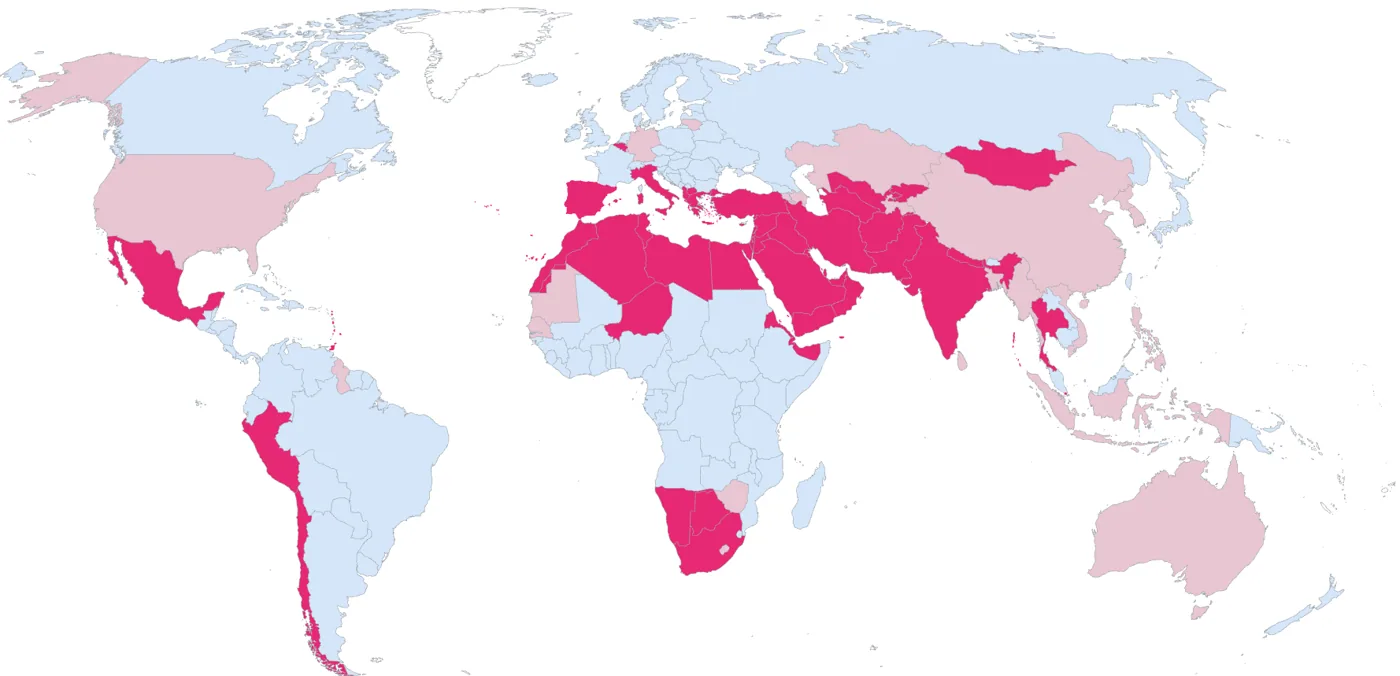
People living under
high water stress**
40%+
3.3B today ~ 4.5B by 2050
Water stress level
- Low to medium (<20%)
- Medium to high (20–40%)
- High to extremely high (>40%)
- No data
SOURCE
* Based on country- and region-level baseline water stress scores from WRI Aqueduct 4.0 (released in 2023). For 16 countries and regions with missing data, scores from Aqueduct 2.0 (released in 2013) were used.
** Total estimated population of areas with water stress scores ranging from “high” to “extremely high.” Estimated by WOTA Corp. by overlaying, on a 1 km grid, basin-level water stress scores from WRI’s “Aqueduct 4.0 Current and Future Global Maps Data” (baseline_annual, 1979–2019; future_annual, 2030 BAU and 2050 BAU) with WorldPop’s “Population Counts / Global mosaics 2015-2030 (1km resolution) R2025A v1” data for 2019 and WorldPop’s “Future Population Projections / Global 1km-grid population projections for 2025-2100 consistent with the SSP, version 0.2” data for 2030 and 2050 (both SSP3).
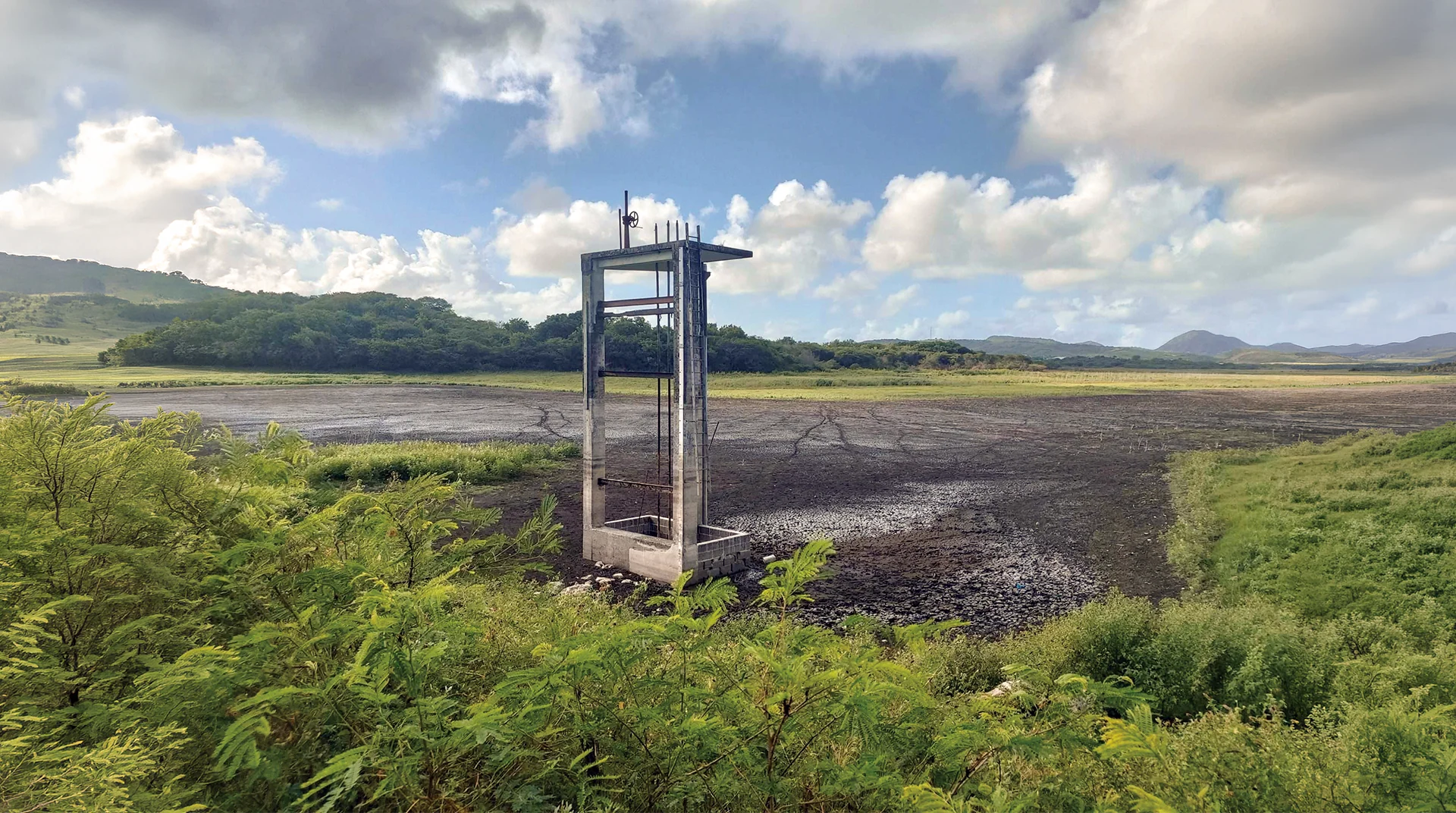
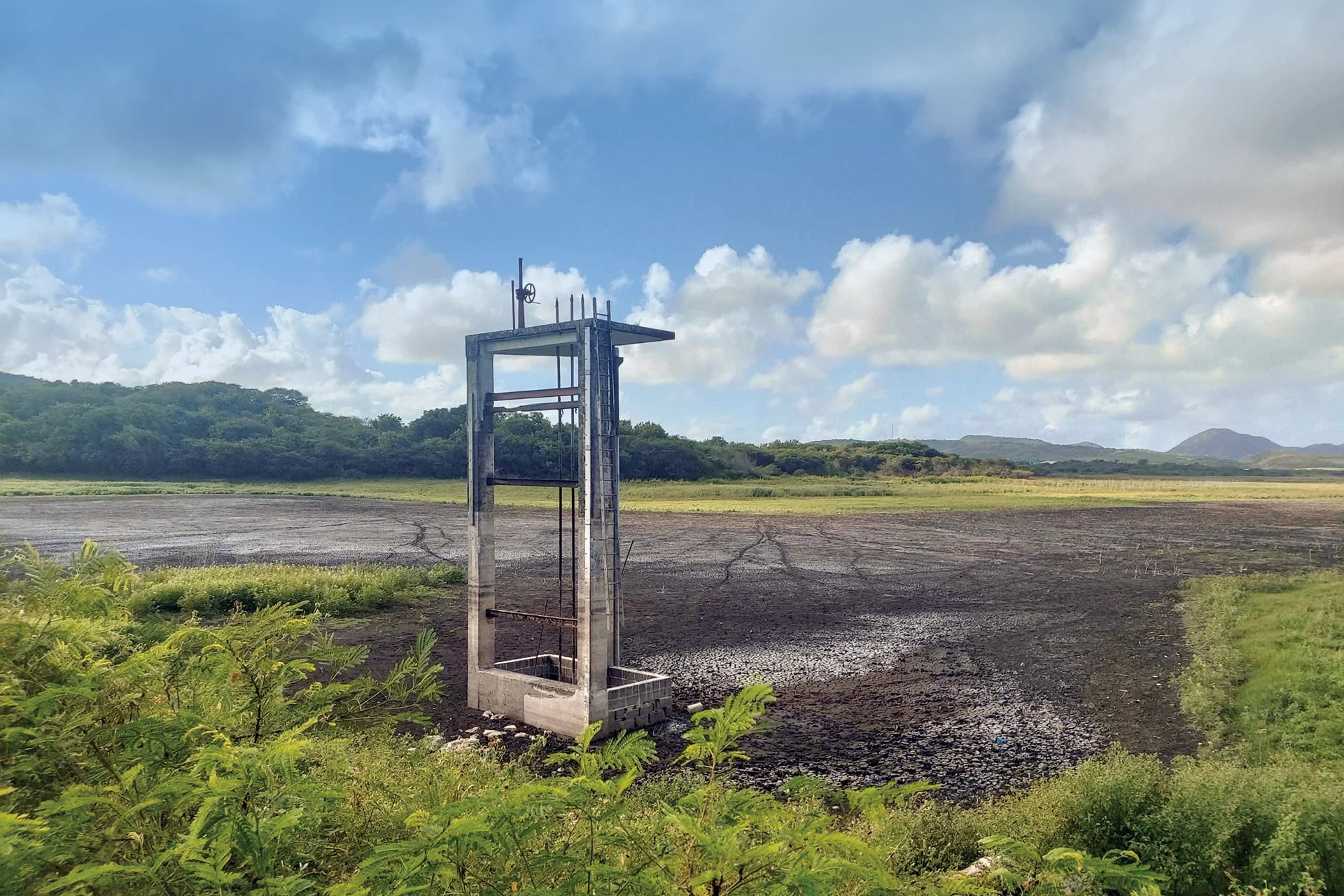
Reservoir in Antigua and Barbuda, where severe water level decline has exposed the reservoir bed and water gauge
Islands challenge
Rethinking water infrastructure for islands with limited freshwater resources
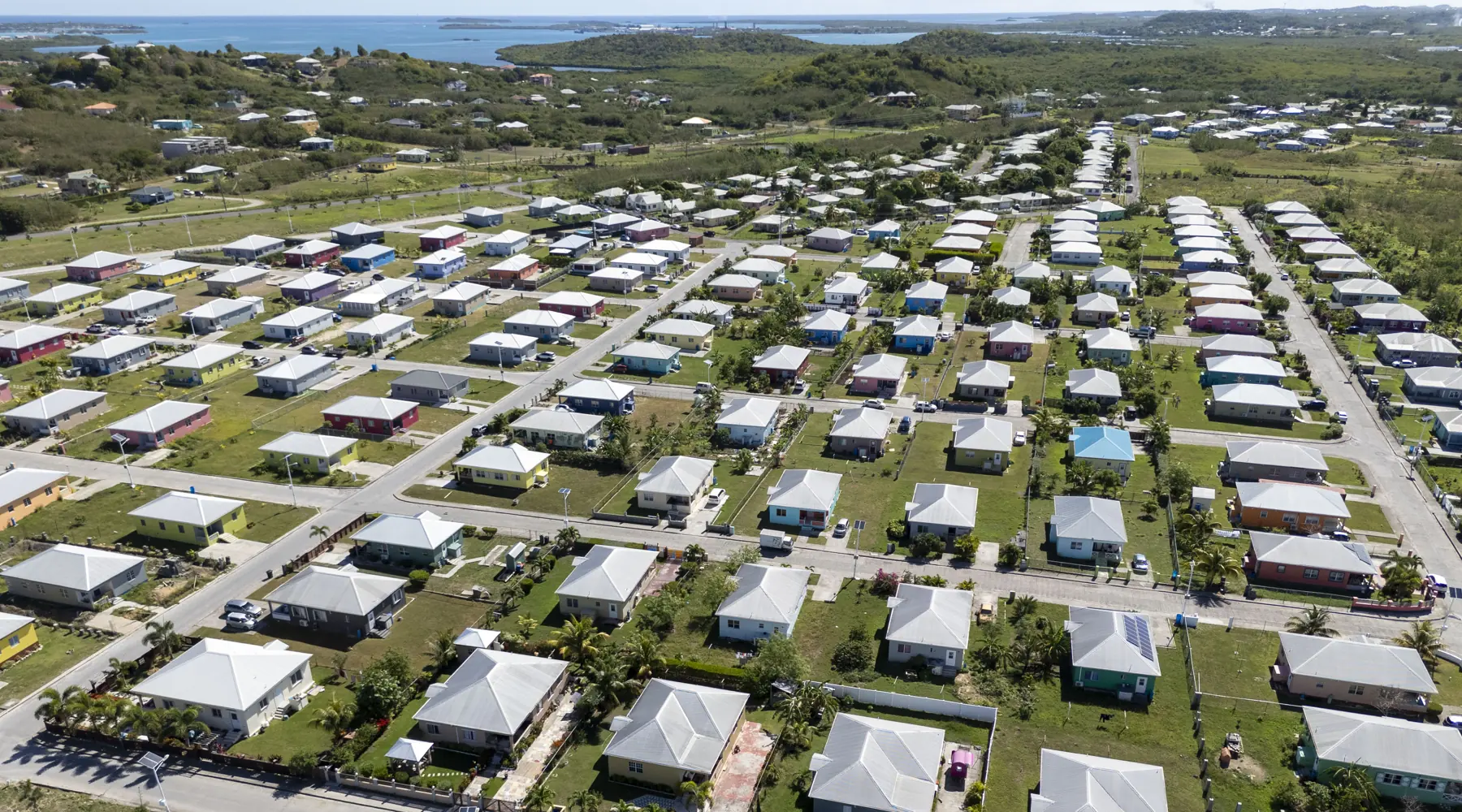
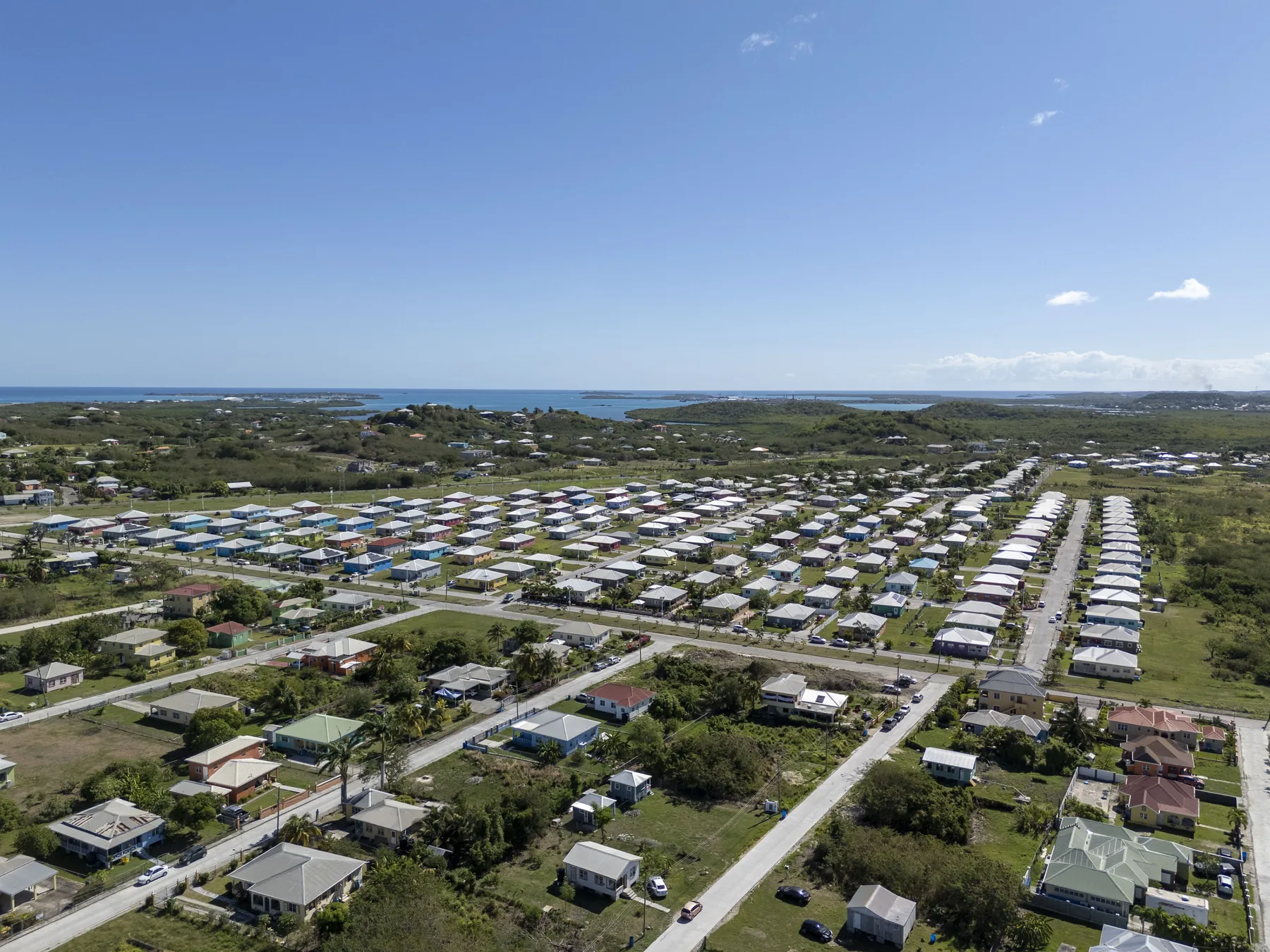
Many island nations share a distinct set of geographic and environmental conditions that make water management particularly challenging. Although these islands are surrounded by water, their geography and geology can make it difficult to collect and store enough rainwater, leaving them with limited freshwater resources for everyday use. As a result, many island nations depend on costly solutions such as seawater desalination or imported water to meet their needs.
Tropical and subtropical islands also face challenges associated with changing climate-related weather patterns and environmental conditions. Hurricanes and other extreme weather events can damage water infrastructure and disrupt supply, while pollution of coastal and marine environments can affect both everyday life and important industries such as tourism. This means that investment is needed not only to secure enough water, but also to protect the natural environments and ecosystems that island communities and economies depend on.
A different path to growth
Many countries have faced similar challenges. During periods of rapid economic growth, wastewater treatment infrastructure was often overlooked, leading to severe water pollution and public health problems. Even as regulations on industrial wastewater improved, untreated household wastewater continued to pollute rivers and lakes. Expanding sewerage networks required decades of development and substantial public investment. Japan, where WOTA was founded, was no exception.
Rather than following the costly path many countries have taken, addressing environmental challenges only after economic growth has occurred, we believe there is an opportunity to do things differently.
By establishing a society where water is kept in circulation from the early stages of development, water scarcity and environmental pollution need not become barriers to economic growth. We believe this is the most reliable way forward.
SOURCE
* Baldacchino, G. (2007) ‘Introducing a World of Islands’ in G. Baldacchino (ed.) A World of Islands: An Island Studies Reader, Charlottetown, Canada and Luqa, Malta, University of Prince Edward Island, Institute of Island Studies and Agenda Academic.
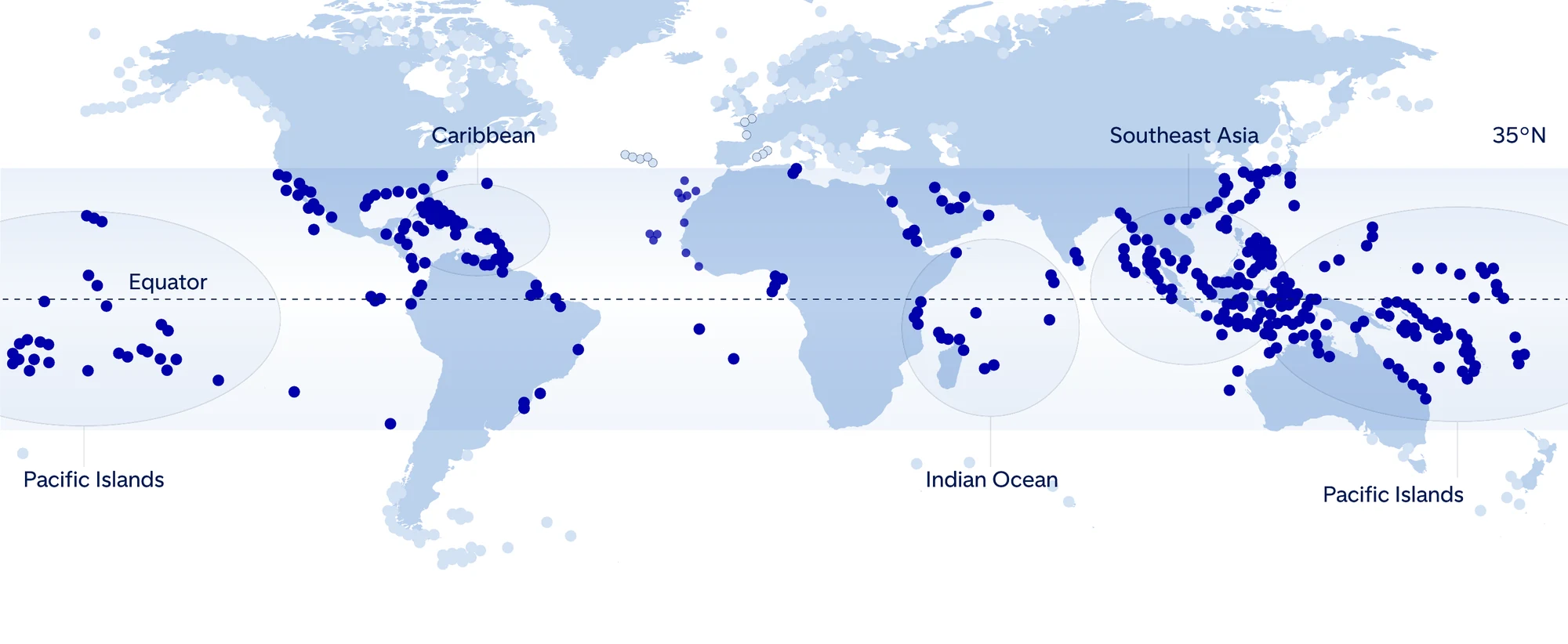
Global Distribution of Island Regions in Tropical and Subtropical Zones
SOURCE
Legend: blue — major islands between 35°N and 35°S; light blue — other major islands.
* The map plots major islands worldwide with land areas between 20 km² and 10,000 km², using landmass data from WRI’s Aqueduct 4.0 Current and Future Global Maps Data. Islands located between 35°N and 35°S are highlighted.
Supporting the sustainable growth of island communities requires solutions that build on existing water infrastructure, make efficient use of limited freshwater resources, strengthen disaster resilience, and contribute to environmental protection.
Limited Freshwater on Islands
- 01
Water Infrastructure Costs
Limited freshwater makes producing and delivering water to homes costly
- 02
Water Outage Risk
Hurricanes can disrupt water and power supplies, leaving homes without water for daily needs
- 03
Water Pollution
Inadequately treated wastewater can pollute groundwater and coastal waters
Solution
Keeping water in circulation
One of the most effective ways to make limited freshwater resources go further is to treat and reuse water instead of using it only once. Small-scale, decentralized water regeneration systems make this possible by collecting wastewater from homes, treating it locally on-site, and making it available for reuse for everyday needs. Rather than being discarded, used water becomes a resource that can be used again. By autonomously controlling advanced water treatment processes, these systems enable a safe and reliable water supply without depending entirely on conventional water networks.
This does not mean replacing existing water infrastructure. Instead, decentralized water regeneration systems can work alongside existing water supply and wastewater networks. By identifying the optimal combination (best mix) of conventional infrastructure and decentralized water regeneration systems for each location, governments and water service providers can develop more cost-effective water infrastructure while reducing the costs associated with constructing and maintaining large-scale treatment facilities and pipeline networks. Regenerating and reusing water at the household level can also reduce demand for freshwater resources, limit wastewater released into the environment, and lessen environmental impacts on groundwater and coastal ecosystems. Having an additional source of water through decentralized systems can also help reduce the risk of supply interruptions during disasters.
How it works

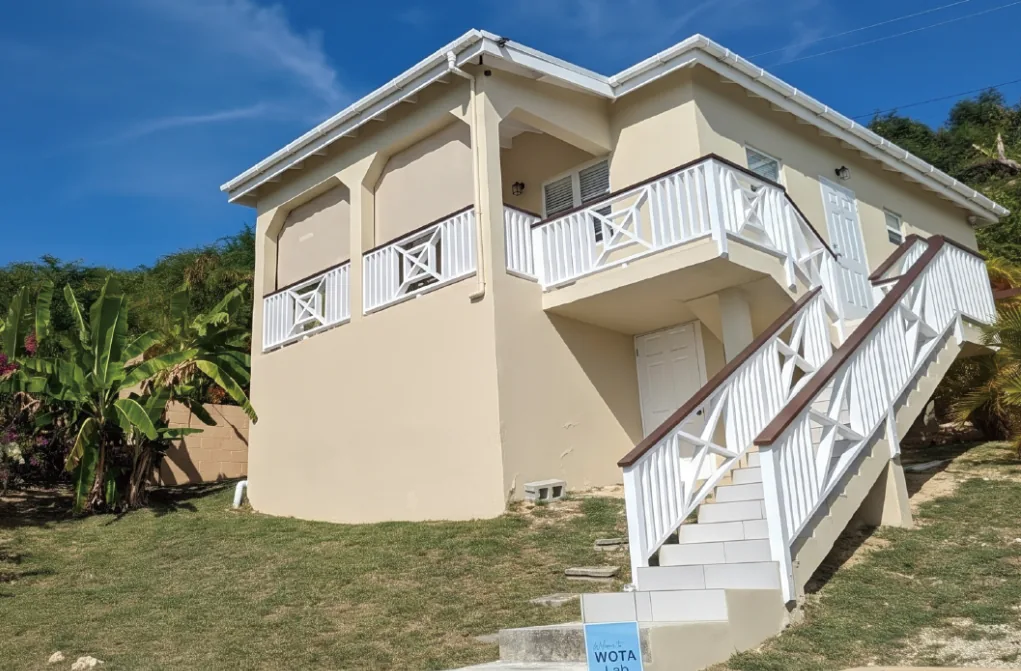
* Actual results may vary depending on usage and conditions. In pilot testing conducted on-site at the WOTA Lab in Antigua and Barbuda, a 95% result was achieved.

Solving the World’s Water Crisis with a Small-scale, Decentralized System
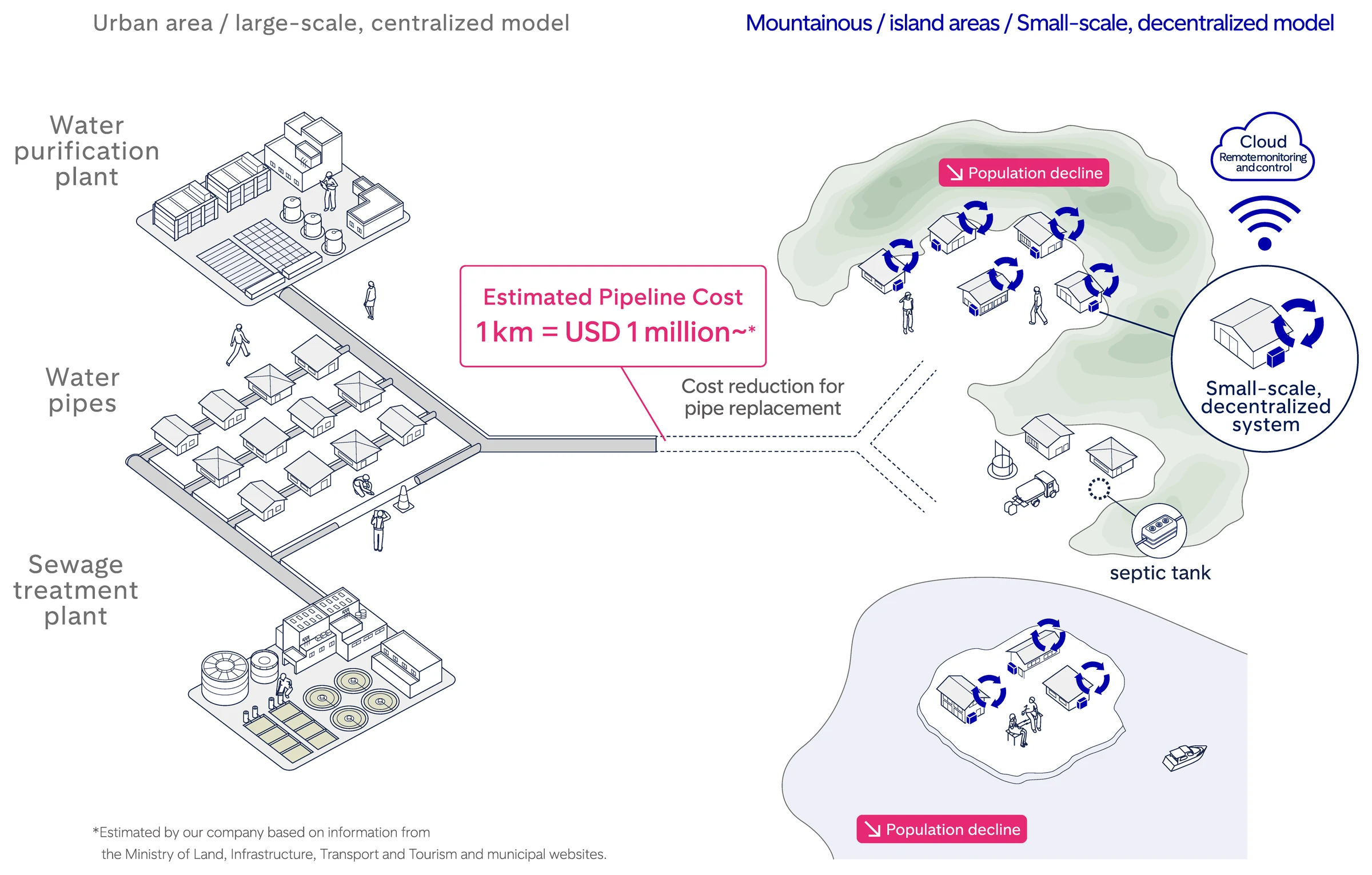
- 01
Cost-Efficient Infrastructure
Combining existing water networks with household water regeneration can lower infrastructure costs in areas where homes are far apart
- 02
Water Resilience
Reusing water at home reduces reliance on external supplies and helps households through water outages
- 03
Protecting the Environment
Treating and reusing wastewater on site reduces discharge and helps protect groundwater and coastal waters
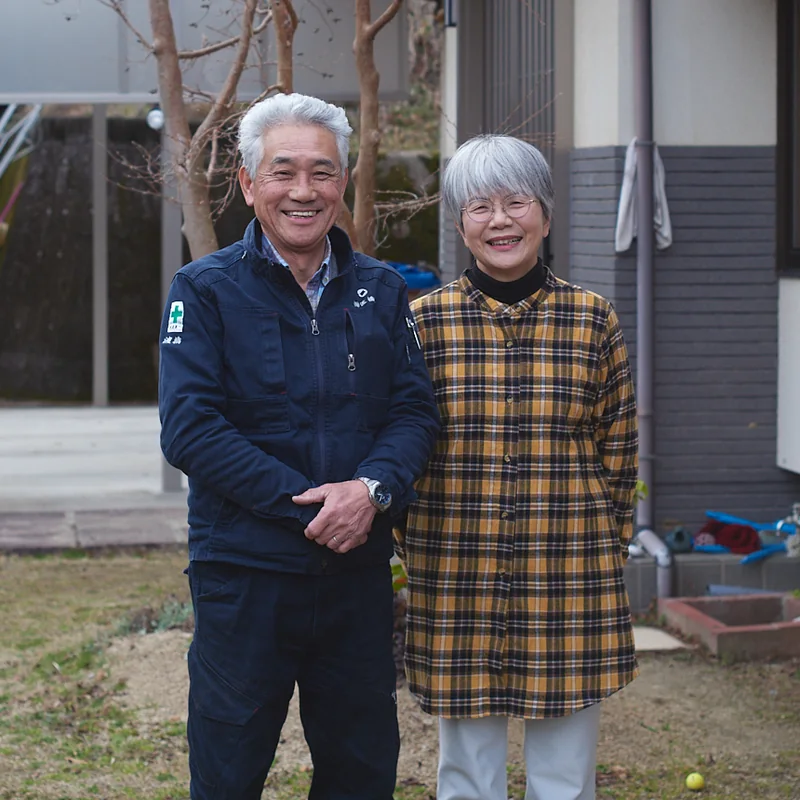
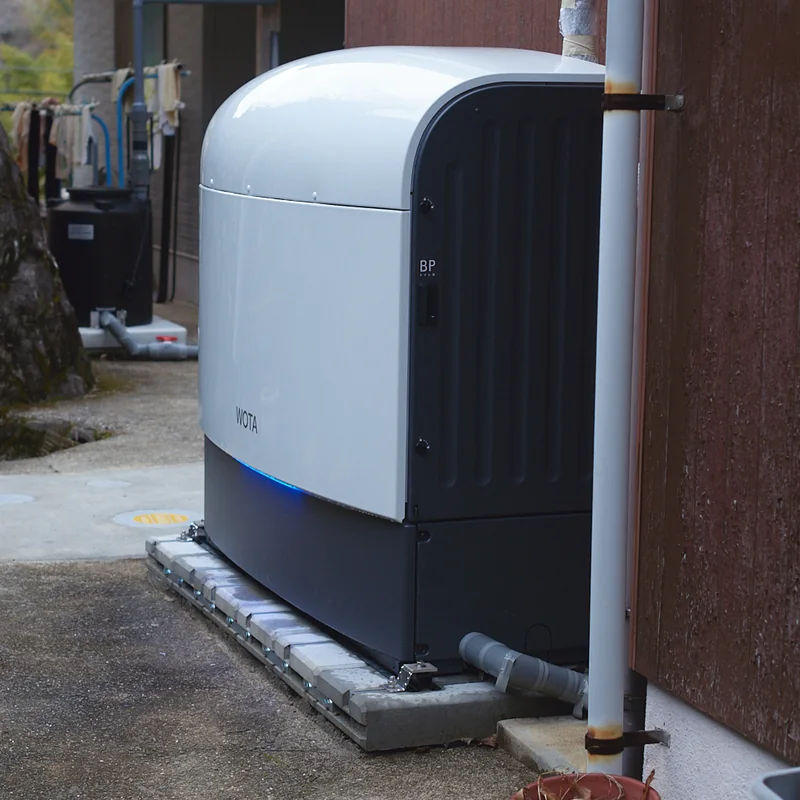
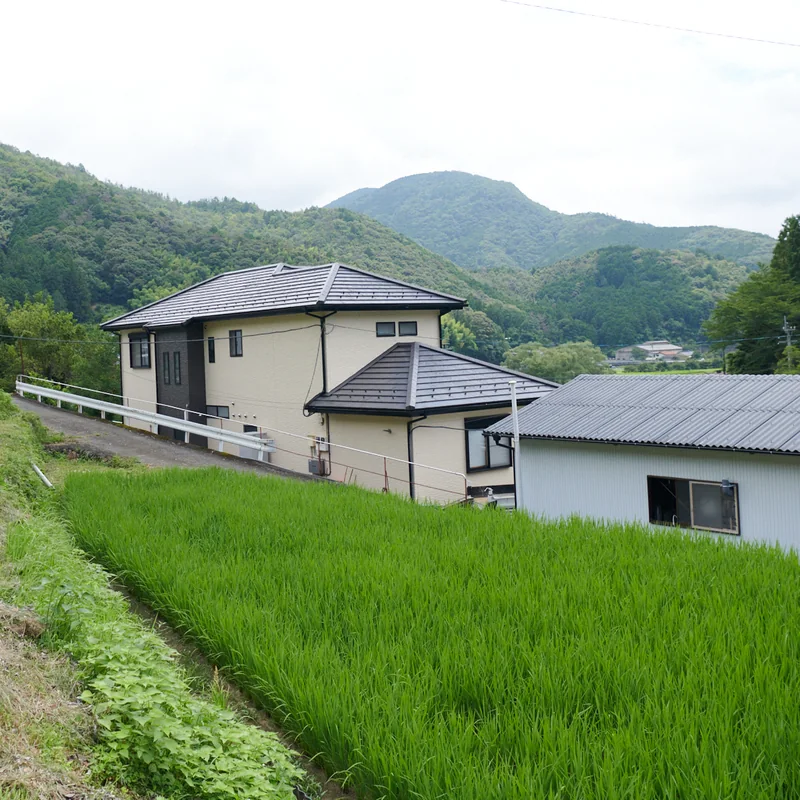
For more than two years, small-scale, decentralized water regeneration systems developed by WOTA for Japanese environments have already demonstrated the ability to supply water continuously. Since 2023, demonstration projects have been under way in more than 20 households across Japan. Based on these results, the Japanese government is working to establish the regulations and operating frameworks needed to make decentralized water regeneration an officially recognized part of the country’s water infrastructure. This Japan-proven model — technology, regulation and operations together — is what WOTA is now bringing to island nations, starting in the Caribbean.
Product
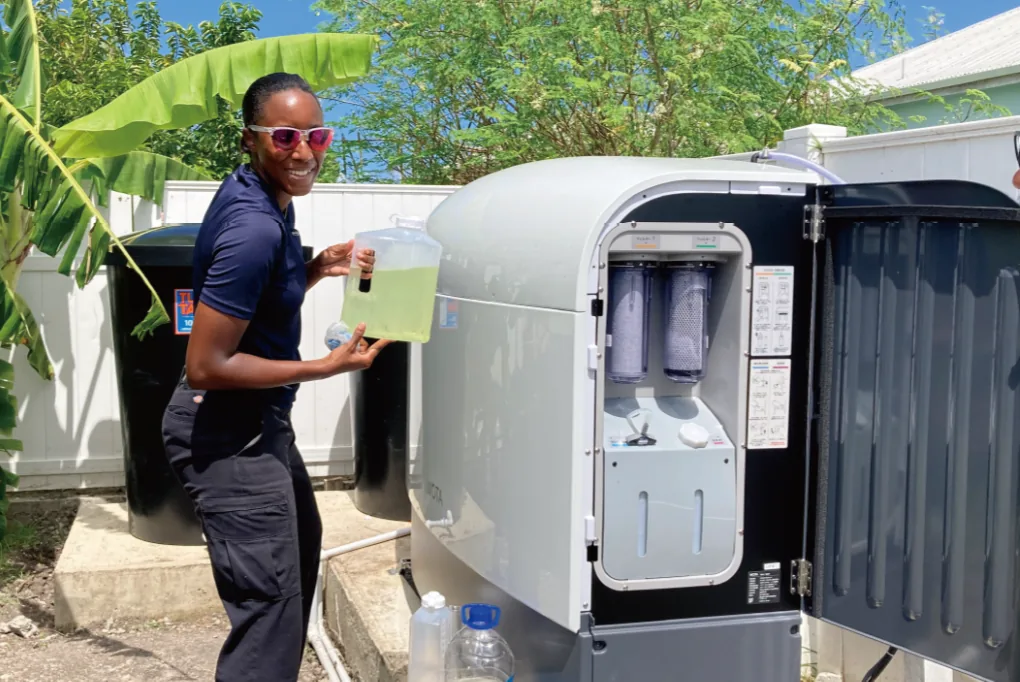
WOTA Unit: a small-scale, decentralized water regeneration system for homes
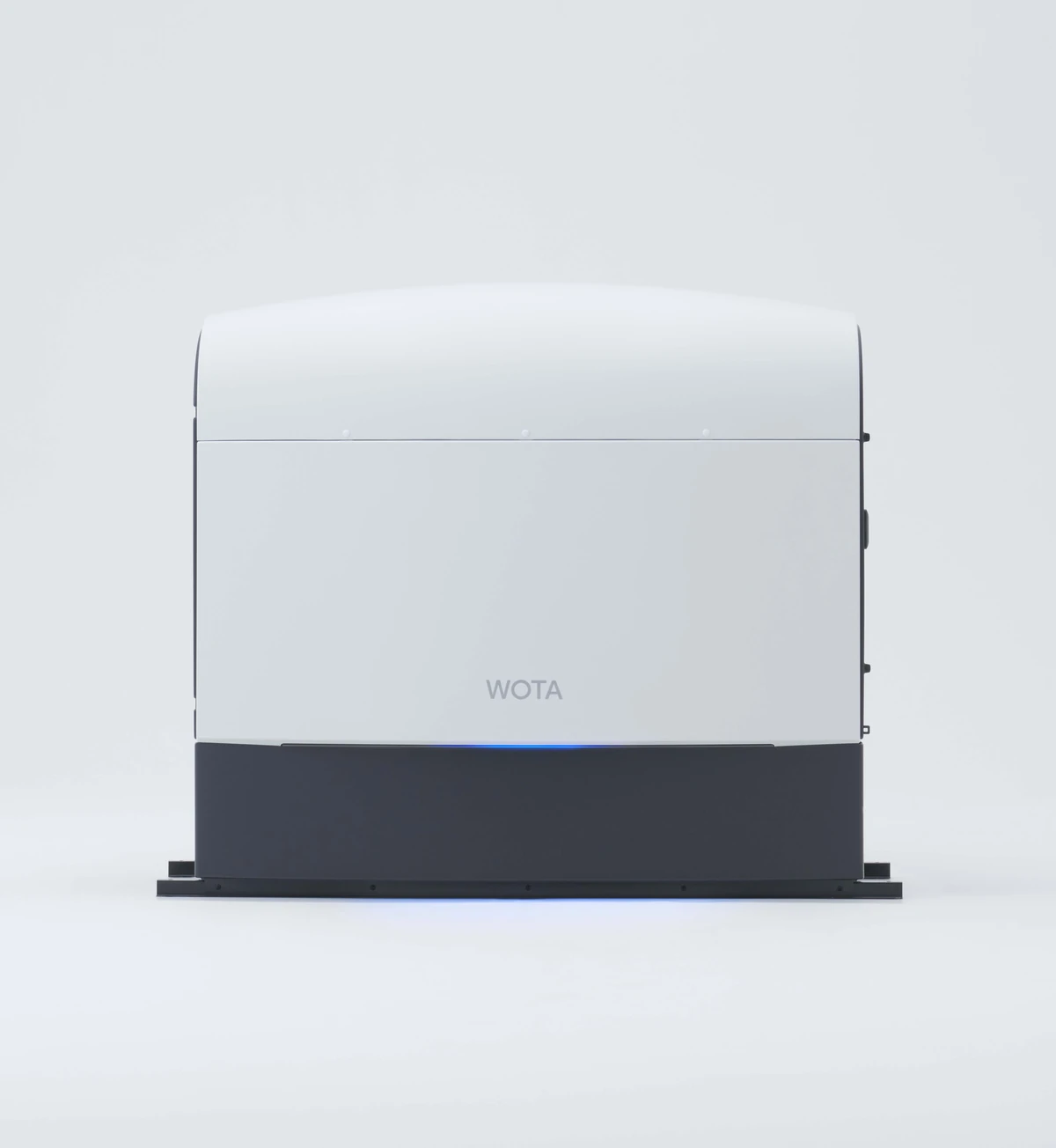
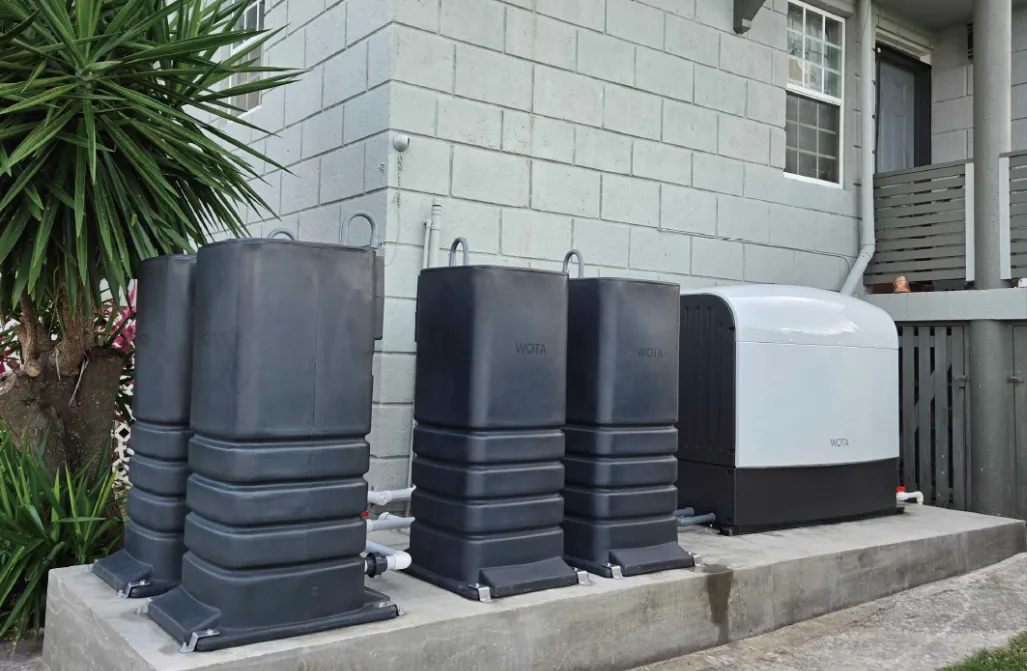
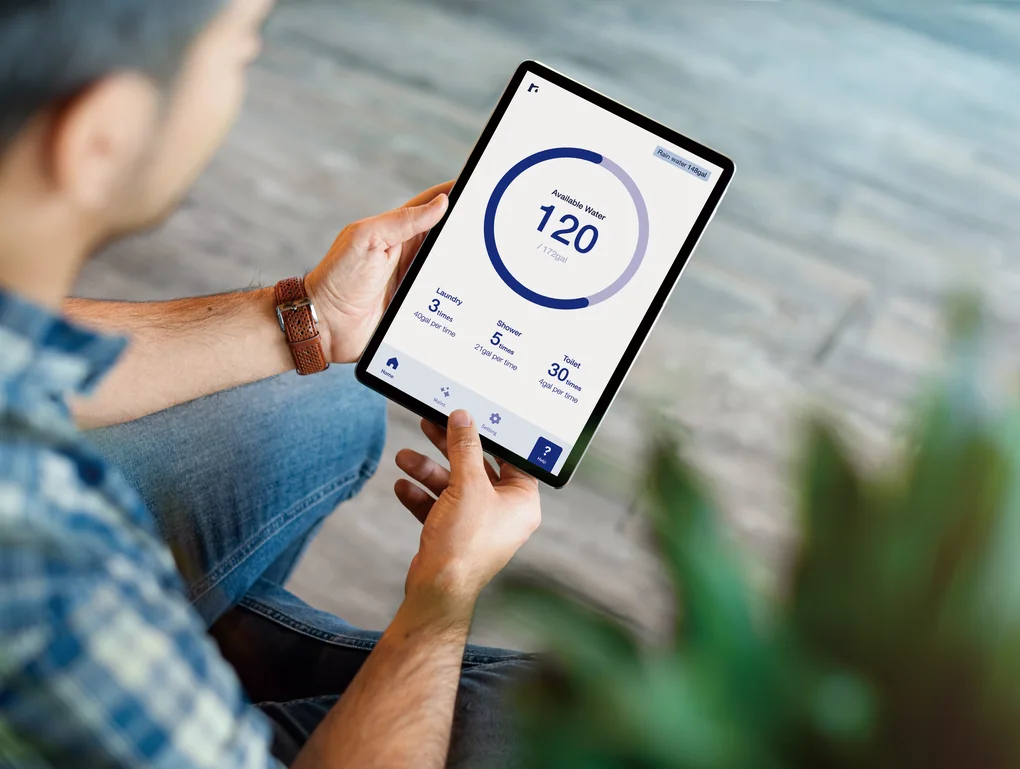
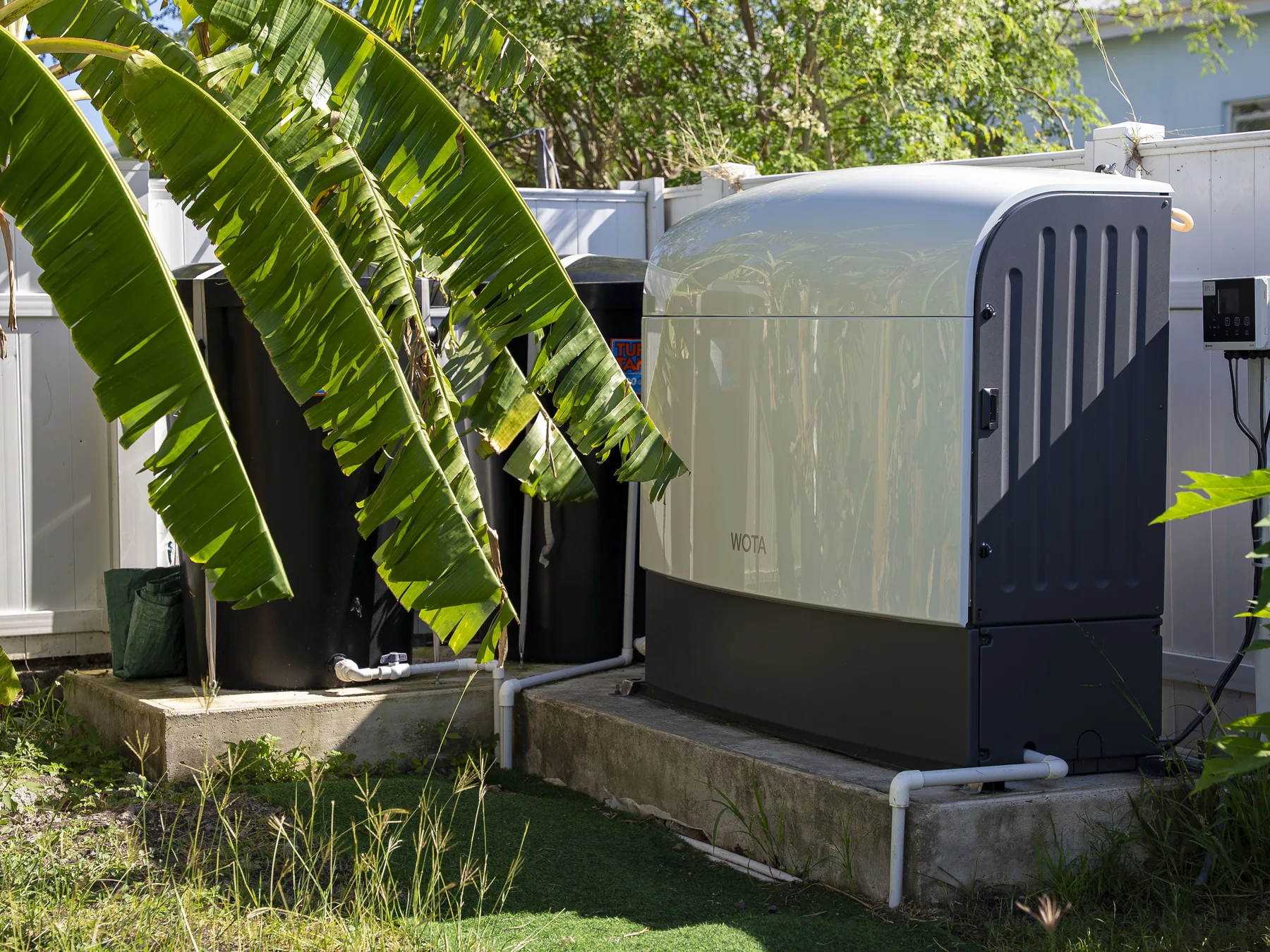
WOTA Unit is a small-scale, decentralized water regeneration system. It treats household wastewater on-site so that it can be reused for daily living. Using WOTA's proprietary autonomous water treatment technology, sensors continuously monitor water quality and other parameters, and algorithms control the treatment process autonomously. As a result, WOTA Unit can regenerate up to 97%* of domestic wastewater from kitchens, bathrooms, laundry and more for repeated use.
*The water recovery rate may vary depending on the usage environment and how water is used.
Note: This water meets WHO drinking-water quality guidelines but is not recommended for drinking.
Case
Building a model for water resilience, starting in the Caribbean
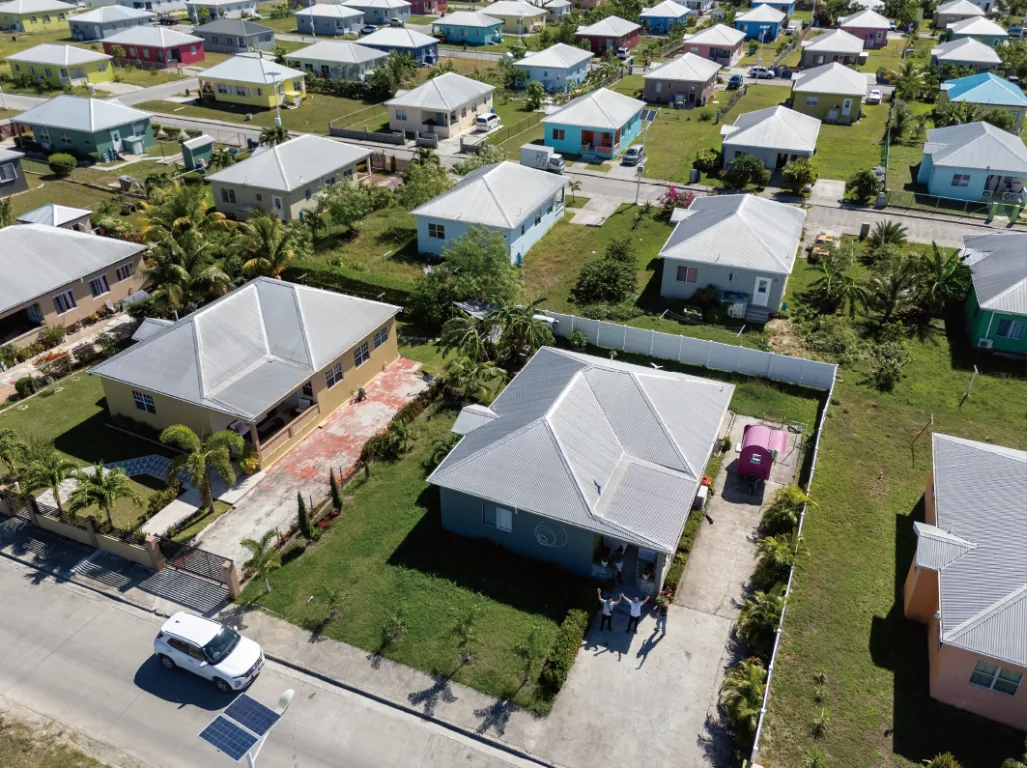
The Water 2040 Island Grows Initiative works with governments, businesses, and residents across the Caribbean to develop long-term solutions to water challenges through decentralized water regeneration systems.
SOURCE
* Renewable water resources per person: FAO AQUASTAT. Water scarcity benchmark (1,000 m³ per person per year): Falkenmark indicator. Share of water supply from seawater desalination: WOTA Corp., “Prime Minister Gaston Browne of Antigua and Barbuda Visits Our R&D Facility for a Technical Inspection” (February 26, 2025), wota.co.jp/en/news-250226/.
In Antigua and Barbuda, for example, renewable freshwater resources amount to approximately 557 m³ per person annually, which is well below the internationally recognized water scarcity threshold of 1,000 m³. The country faces some of the world’s highest levels of water stress. Drought and saltwater intrusion have further reduced the availability of groundwater, while approximately 95% of the country’s water supply now comes from seawater desalination. Repeated hurricanes also damage infrastructure, presenting challenges to maintaining a reliable and stable water supply.
Water shortages and interruptions affect more than access to water itself. The time and effort required to secure water for household use can come at the expense of work, education, and other activities that contribute to quality of life.
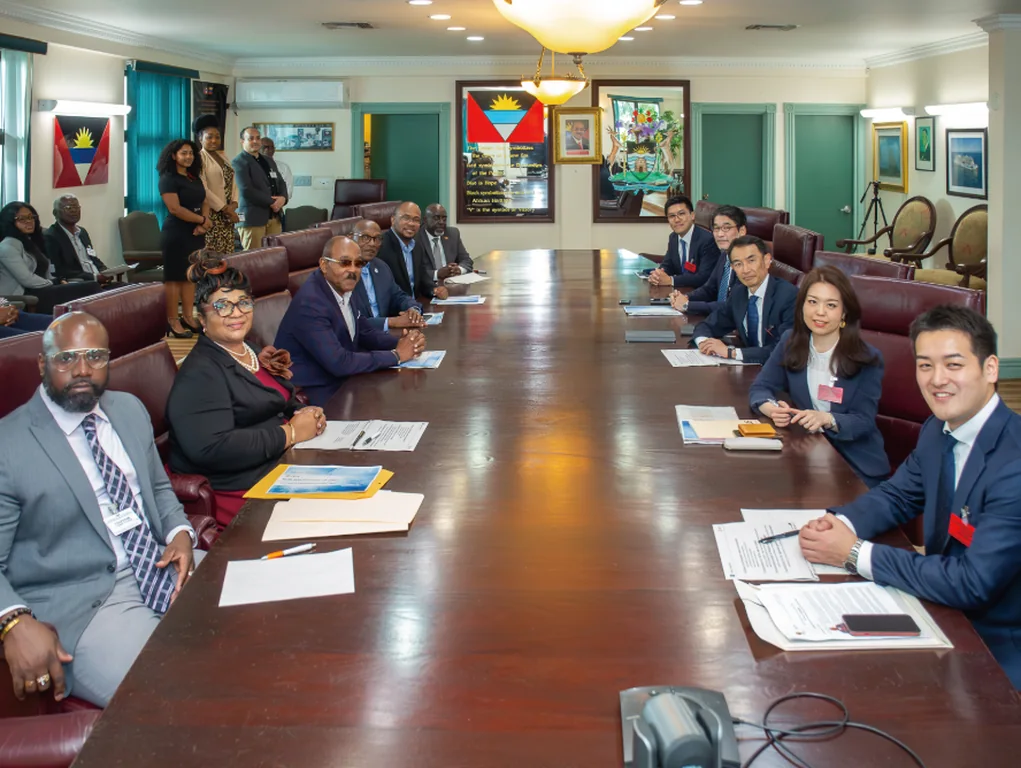
WOTA’s work in the Caribbean has progressed from initial discussions with the Government of Antigua and Barbuda to testing decentralized water regeneration technology on the ground. Following discussions with government ministers at COP26 in 2021, WOTA signed a memorandum of understanding with the Government of Antigua and Barbuda in 2022, laying the foundation for research and technical demonstrations. In 2024, WOTA began testing its small-scale, decentralized water regeneration systems in the country, taking an important step toward understanding how the technology could be applied to local water challenges.
Building on this progress, WOTA signed a grant agreement under a United Nations Industrial Development Organization (UNIDO) programme in May 2026 to carry out a large-scale business demonstration project in the Caribbean. Today, WOTA is working to expand the use of its systems and develop the local operations needed to support them over the long term, beginning with Antigua and Barbuda and Barbados.
Voice
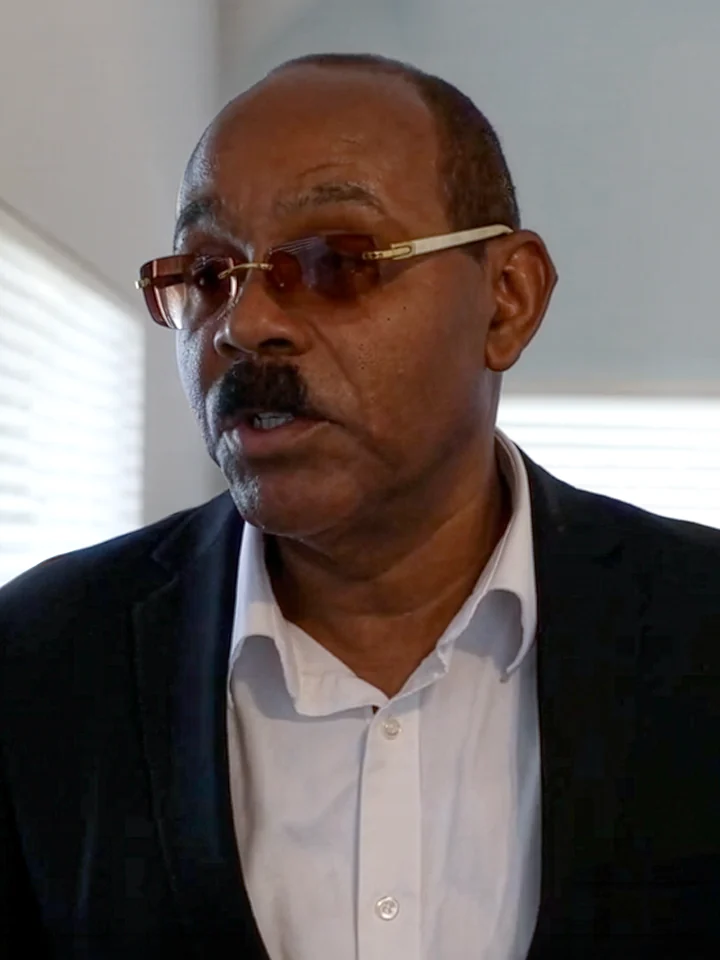
“I believe that this will certainly bring some resolution to the water shortage that we’ve had. The government of Antigua and Barbuda is in full support of this technology. We will do what’s necessary to ensure its viability and sustainability.”The Honourable Gaston BrownePrime Minister of Antigua and Barbuda
WOTA is implementing a demonstration project for small-scale, decentralized water regeneration systems in Antigua and Barbuda and across the Caribbean under UNIDO’s “Industrial Cooperation Programme in the Global South through Technology Transfer from Japan,” funded by the Government of Japan.


Roadmap
From the Caribbean to islands worldwide: A roadmap to 2040
Establishing a reliable and sustainable water supply requires more than installing new technology. It also means putting the right policies, regulations, and financial frameworks in place, establishing services to operate and maintain the systems, and developing local technical expertise. The Water 2040 Island Grows Initiative is working to bring these elements together in the Caribbean to build an adaptable model for long-term water resilience.
We are working to build partnerships with governments, businesses, and financial institutions to establish a clear path toward addressing the root causes of water challenges and expanding this model to island nations worldwide.
By 2030: Establish a complete, working model in Antigua and Barbuda and Barbados: decentralized water regeneration systems in operation, a local operations and maintenance service, and a regulatory framework that recognizes the systems as part of national water infrastructure.
By 2035: Adapt the model to other island regions — the Pacific, the Indian Ocean, Southeast Asia — with financing frameworks and local partners in place, so that adoption no longer depends on WOTA alone.
By 2040: Decentralized water regeneration is an established option in island water infrastructure worldwide, giving people on islands with limited freshwater reliable access to the water they need for everyday life.
Ultimately, our goal is to support a future in which more than 600 million people living on islands worldwide can meet their water needs without the constraints of limited freshwater resources, enabling sustainable social and economic growth in harmony with the natural environment.
FAQ
01. What is a small-scale, decentralized water regeneration system?
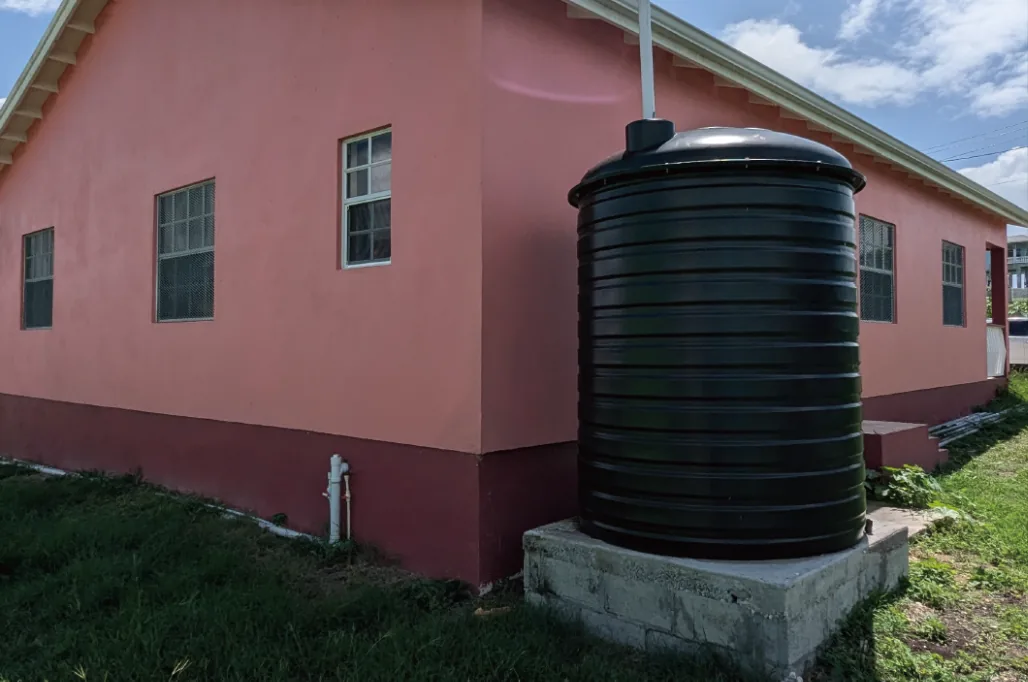
A small-scale, decentralized water regeneration system collects wastewater from showers, sinks, kitchens and washing machines, treats it on-site, and makes it available for reuse, including toilet flushing. The system is installed alongside rainwater storage tanks and dedicated water supply and drainage pipes. Rainwater replenishes the system and supplements the regenerated water supply, allowing households to manage their water supply and wastewater independently of conventional water supply and sewerage networks.
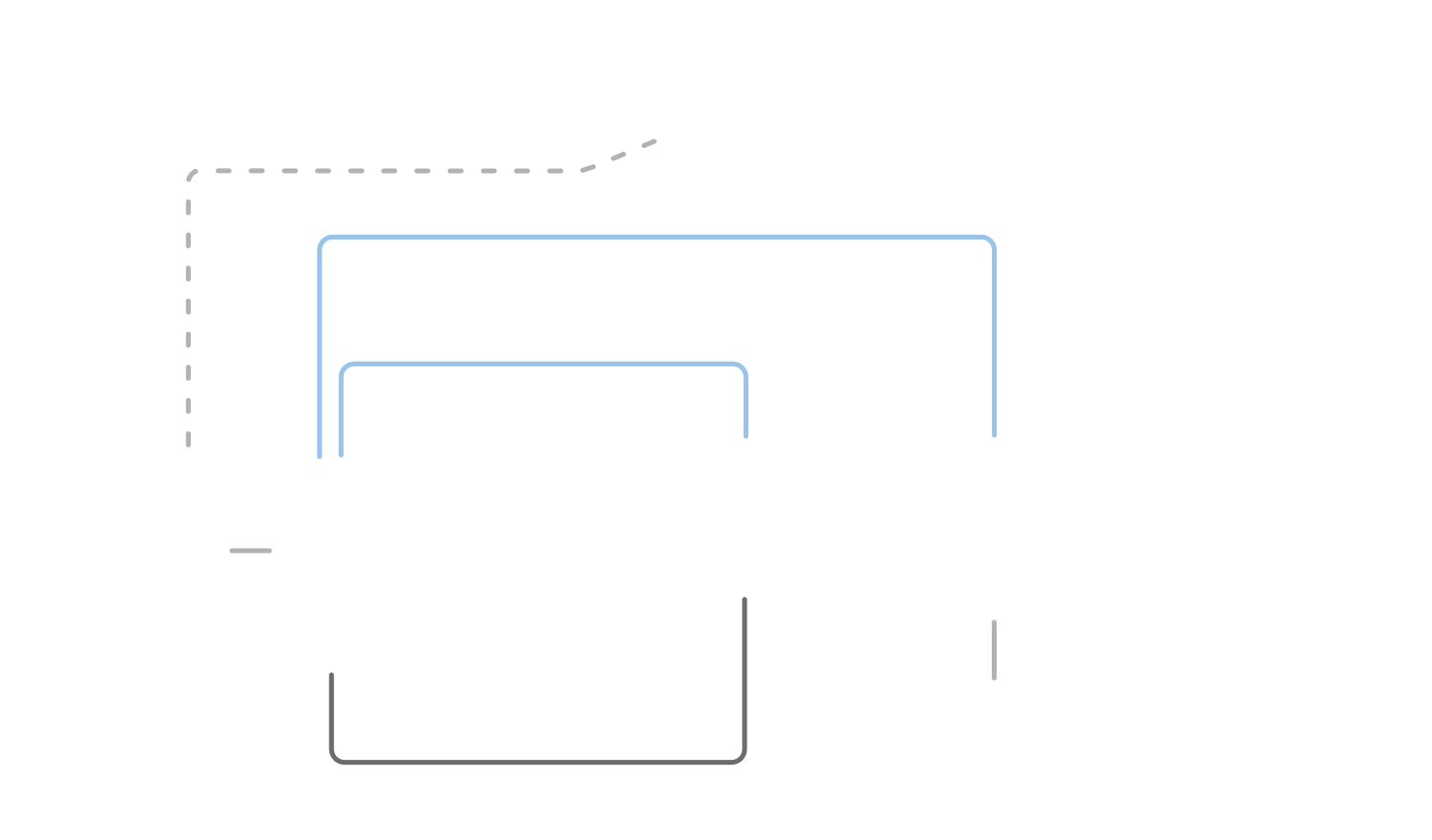
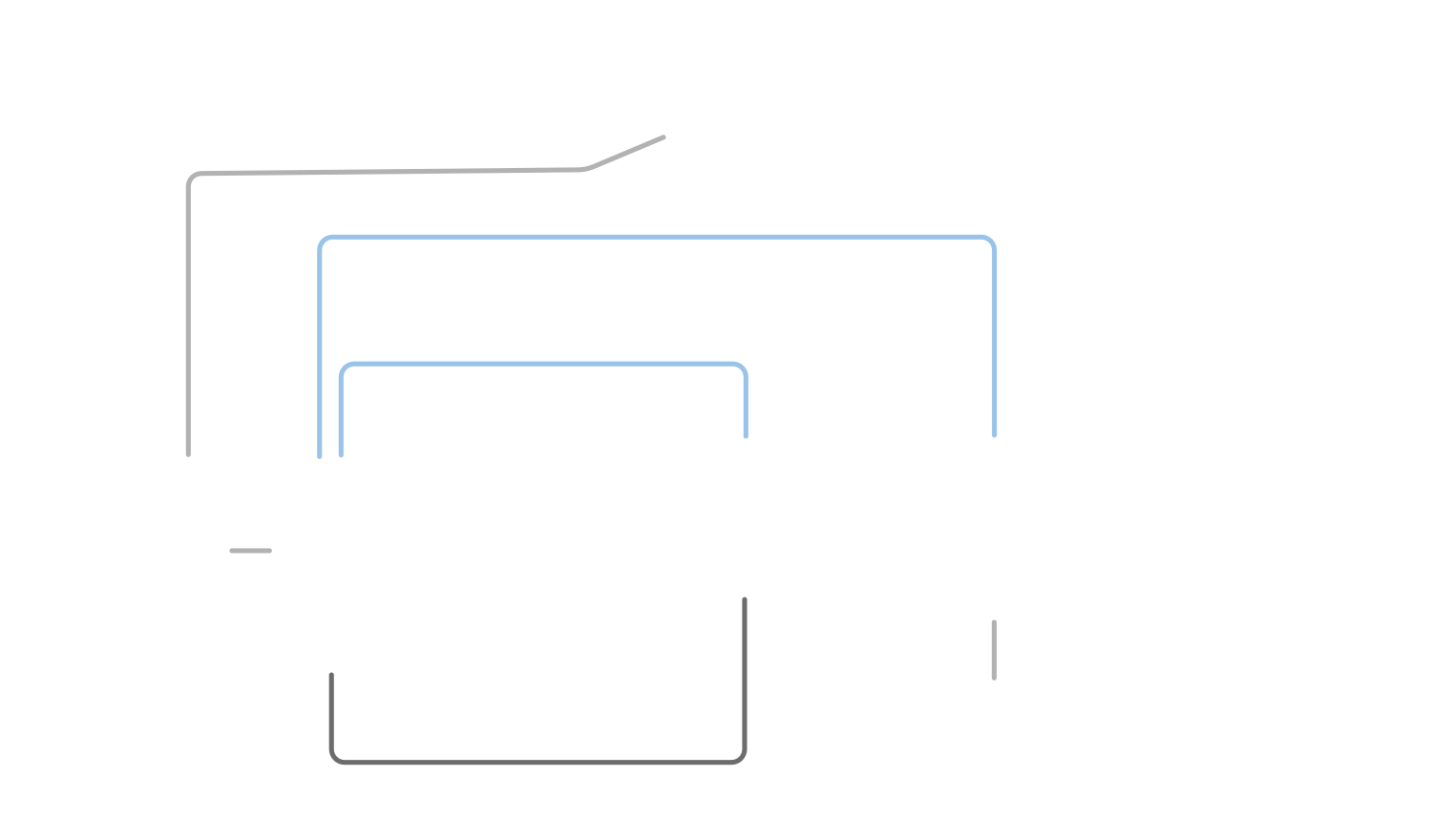
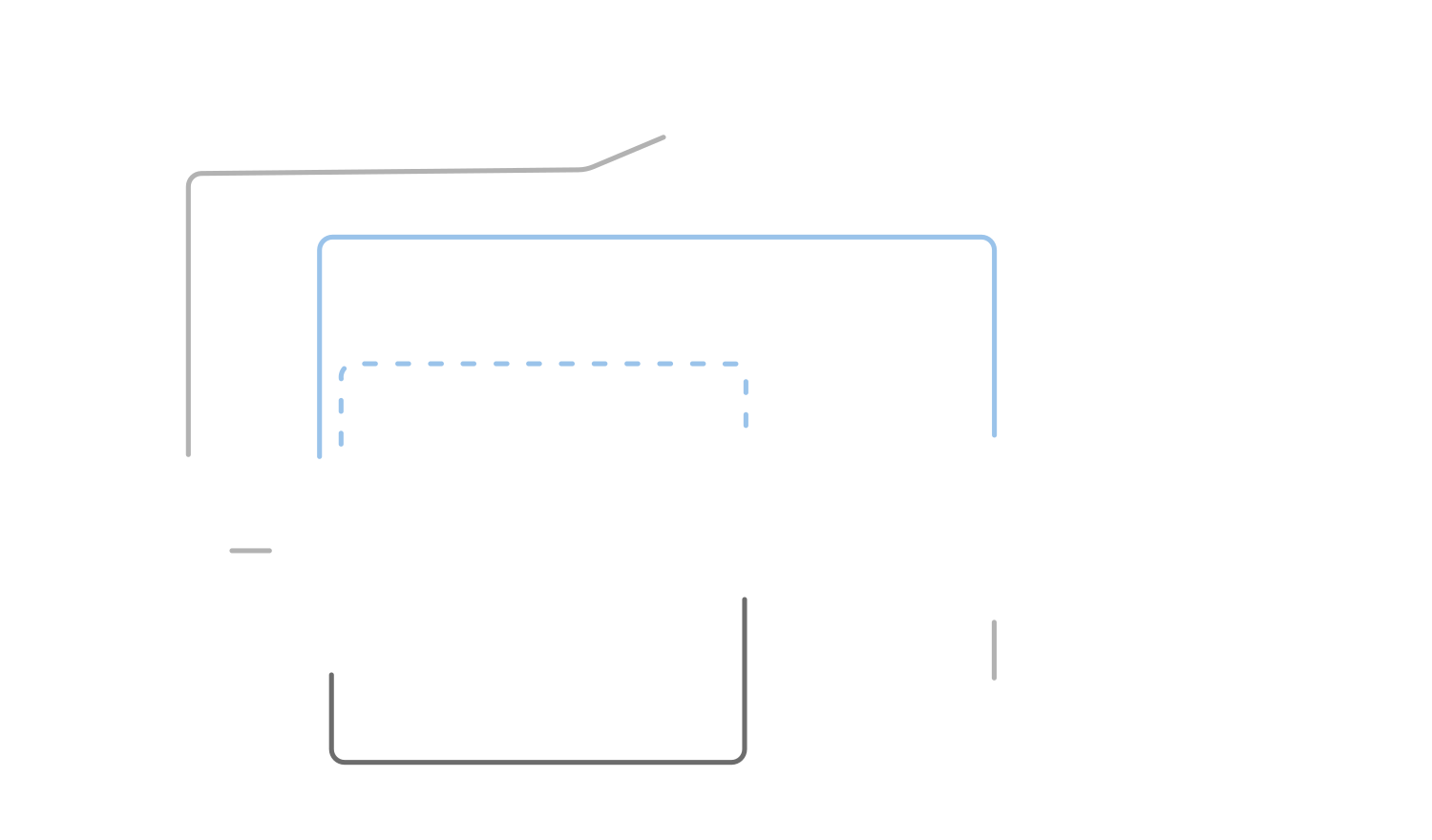
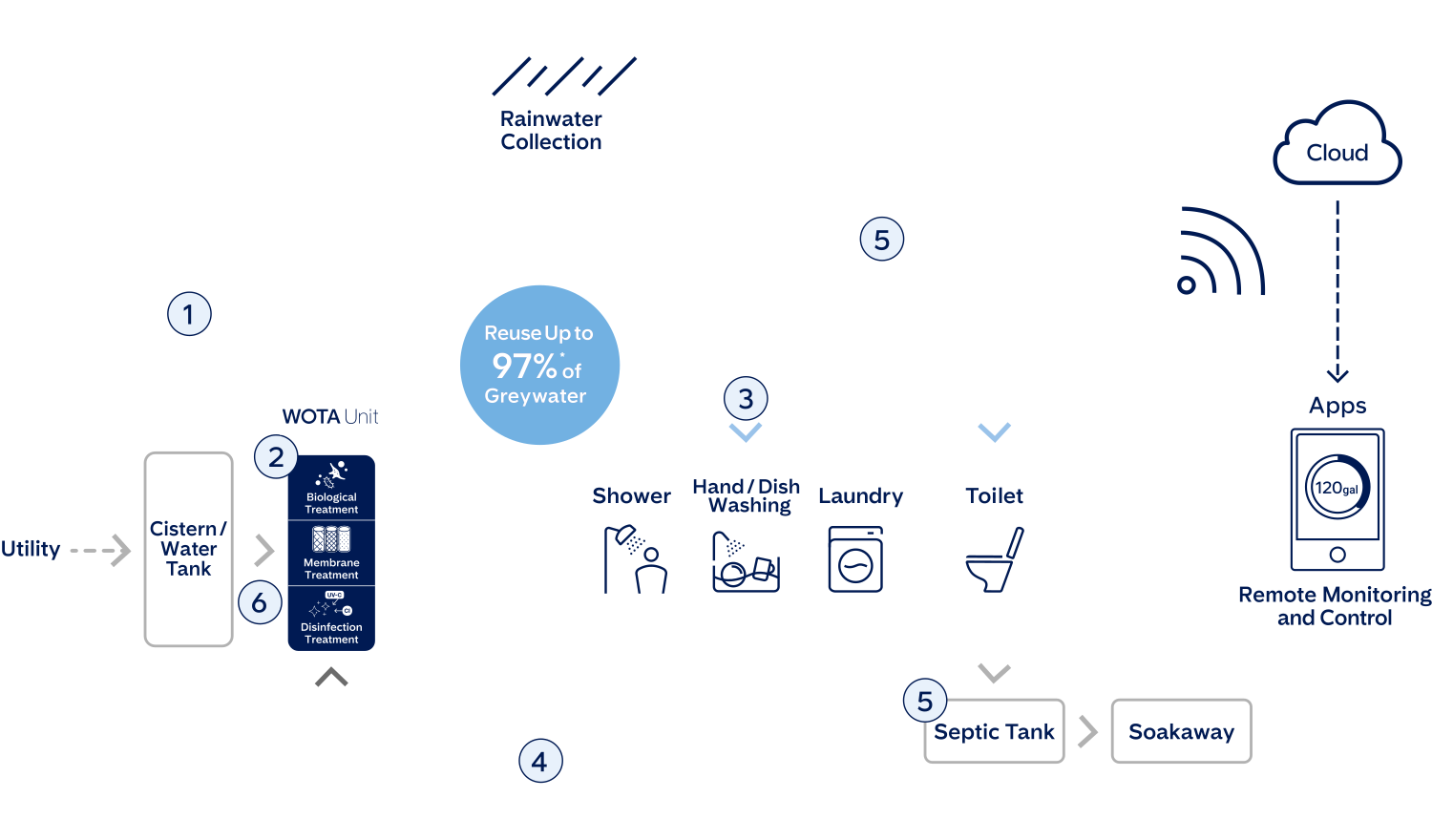
* Actual results may vary depending on usage and conditions.
In pilot testing conducted on-site at the WOTA Lab in Antigua and Barbuda, a 95% result was achieved.
Rainwater is collected from the roof and stored in a tank.
Water is treated through biological treatment using microorganisms, membrane filtration, and sterilization with UV light and chlorine. This produces safe water for household use and toilet flushing.
Showers, kitchens, and washing machines can be used just like in a conventional home.
- *1 Since water treatment takes time, the amount of water available at once is limited.
- *2 Although the water meets the WHO Guidelines for drinking-water quality, it is not recommended for drinking.
All wastewater from showers, kitchens, and washing machines is collected and treated by the WOTA Unit (Domestic Water Regeneration Unit).
- *3 Please do not pour chemicals or food waste that may overload the microorganisms or filters down the drain.
Toilet wastewater will continue to be discharged to the sewer system, septic tank, or other appropriate wastewater treatment facilities as before, and will not mix with the treated water.
The amount of water lost through evaporation, toilet flushing, etc. is replenished from the rainwater tank to the WOTA Unit.
02. Where can I learn more about WOTA’s products?
For more information about WOTA’s products and technologies, please visit our product website.
03. How is wastewater treated?
WOTA Unit uses a combination of water treatment processes to turn household wastewater into safe water for everyday use. These include biological treatment, physical treatment (solid-liquid separation and membrane filtration), chlorination, and disinfection using deep ultraviolet light. The treated water meets the water quality standards set out in the World Health Organization (WHO) Guidelines for Drinking-water Quality. Although the water meets Japan’s Waterworks Act drinking-water quality standards (51 parameters), it is not recommended for drinking.
04. How is water safety maintained?
WOTA Unit is equipped with an internet-connected remote monitoring system that enables real-time monitoring and management of water quality, system performance, and any abnormal operating conditions. The system continuously monitors key water quality indicators, including residual chlorine, turbidity (how cloudy the water is), and color, which are typically checked through daily water quality testing.
05. What activities is WOTA undertaking in the Caribbean?
With support from the Japanese government, WOTA is conducting demonstration and development projects involving WOTA Unit, our small-scale, decentralized water regeneration system for homes, in Antigua and Barbuda and Barbados. These projects are part of the Industrial Cooperation Programme in the Global South Through Technology Transfer From Japan, led by the United Nations Industrial Development Organization (UNIDO). The program supports the introduction and local application of Japanese technologies and expertise in partner countries.
For further details, please visit the website of the UNIDO Investment and Technology Promotion Office in Tokyo.
Contact
Interested in learning more about the Initiative?
Get in touch with the WOTA team.